
Deadline Afterlife Processing AI Generated Text and Soul Fragment Writing
Official Steam store documentation for Deadline: Afterlife Processing describes soul biographies as matter-of-fact case files consisting of three text fragments per soul, while player threads on the Steam community hub discuss whether generative models produced any terminal records.
Official Steam store documentation for Deadline: Afterlife Processing describes soul biographies as matter-of-fact case files consisting of three text fragments per soul, while player threads on the Steam community hub discuss whether generative models produced any terminal records.
Official Text Specifications and Store Disclosures
MD Studio, the developer and publisher of Deadline: Afterlife Processing, details the game's narrative structure directly through its Steam store listing. The game operates without standard user interface elements such as menus, minimaps, or health bars. Instead, every narrative detail exists within the physical room through paper documents, machinery, and amber terminal text.
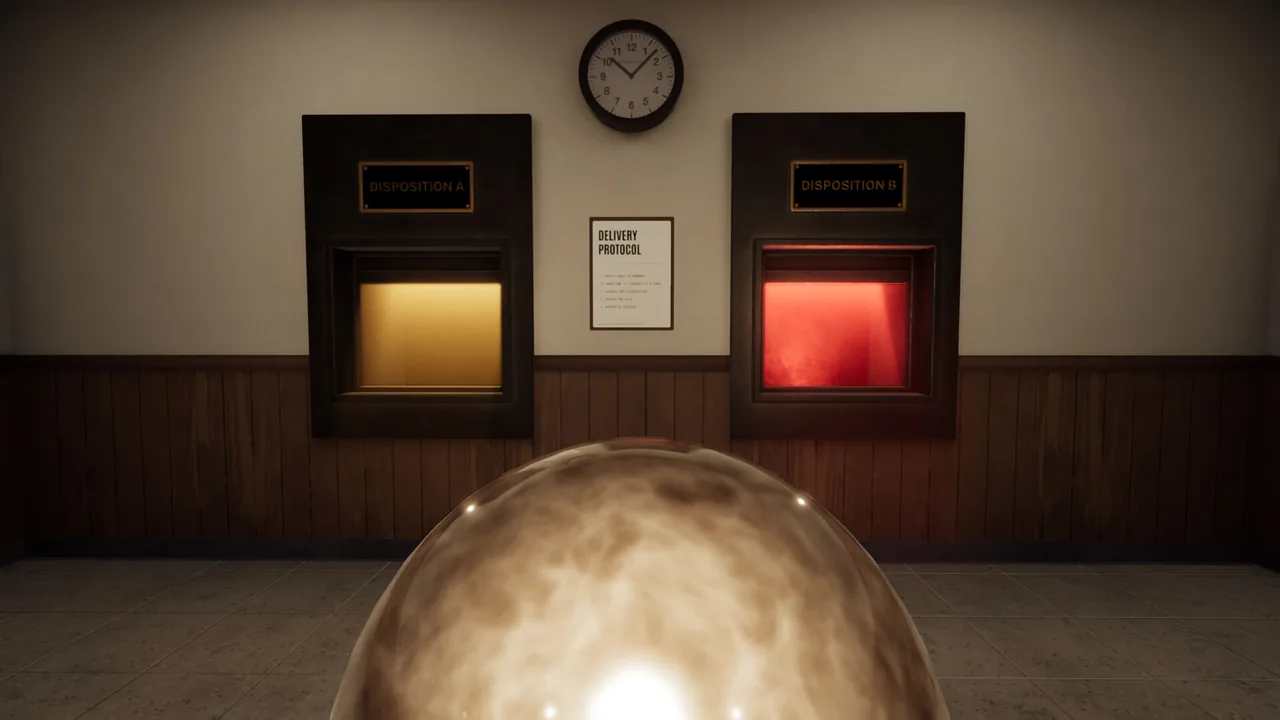
The developer mature content disclosure outlines the nature of these written passages. Player duties center on reading short, non-graphic descriptions of deceased human lives. These files reference moral wrongdoing, alcohol use, and crimes such as theft, fraud, and killings. MD Studio notes that all sensitive subject matter appears strictly as brief, matter-of-fact text, while souls appear visually only as abstract glowing spheres. Official store tags and feature lists do not state that generative machine learning software created these records, leading players to examine how the written records behave during active shifts.
Narrative Mechanics at Station 9
Every arrival processed at Station 9 arrives with a case file segmented into distinct parts. Operators inspect these files to match individual actions against the official directives posted on the wall. Consulting the posted rules determines whether the subject should ascend or descend.
The written records do not provide a complete biography. Instead, the terminal displays three specific perspectives to challenge the judgment process:
- Confessions detailing personal admissions of wrongdoing or guilt.
- Alibis explaining personal justifications or mitigating context.
- Neighbor observations reporting external accounts of the person's daily behavior.
Because these fragments offer limited perspectives, players faced with ambiguous cases must exercise operator discretion when no specific numbered rule applies. Understanding these written records is central for any operator starting out with the beginner guide.
Soul Fragment Formats and Judgment Criteria
The following table outlines how the three designated fragment types present biographical data and how operators weigh them against workplace directives:
| Fragment Type | Documented Information | Processing Application |
|---|---|---|
| Confession | Firsthand acknowledgment of crimes, fraud, or moral errors | Checked directly against numbered board rules like theft mandates |
| Alibi | Explanatory context surrounding circumstances or motives | Used during moral choices when rules do not strictly fit |
| Neighbor Observation | Third-party statements on lifestyle, social habits, or charity | Weighed to determine alignment toward Disposition A or Disposition B |
Once the operator reads the amber monitor, sets the verdict, and pulls the confirmation lever, the soul receives its stamp and transfers to Gold or Red disposition bins.
Community Inquiries and Scenario Discussions
On the Steam Community forum, a dedicated discussion topic titled "Was AI / LLM tech used for the texts of this game?" reflects player curiosity about the origin of the soul records. Because the core gameplay loop demands processing a continuous queue of souls across repeated shifts, the sheer volume of short text entries has prompted questions regarding the writing workflow.
Another related discussion thread on the Steam hub asks about the possibility to "Add my own scenarios?", showing interest in expanding the pool of soul fragments beyond the base game. The official store page confirms that the rulebook continuously expands and amends itself over time, though all currently demonstrated files fit the structured, three-fragment format designed by MD Studio for the demo and the planned Q1 2027 release. Operators wanting to test these written files directly can inspect the available demo on Steam.
Related Guides
Custom Scenarios
Evaluate Steam community discussions regarding custom scenarios alongside official station mechanics and record processing in DEADLINE: Afterlife Processing.
Demo Overview
Understand shift structures, sorting rules, upgrade station mechanics, and hardware requirements for the Steam demo of Deadline Afterlife Processing.