
Deadline Afterlife Processing Trailer Breakdown and Gameplay Details
The Deadline Afterlife Processing trailer reveals MD Studio's bureaucratic afterlife simulator, where operators at Station 9 review deceased souls across three terminal fragments, apply shifting directives from the rulebook board, and earn wages to purchase machine upgrades from the catalog.
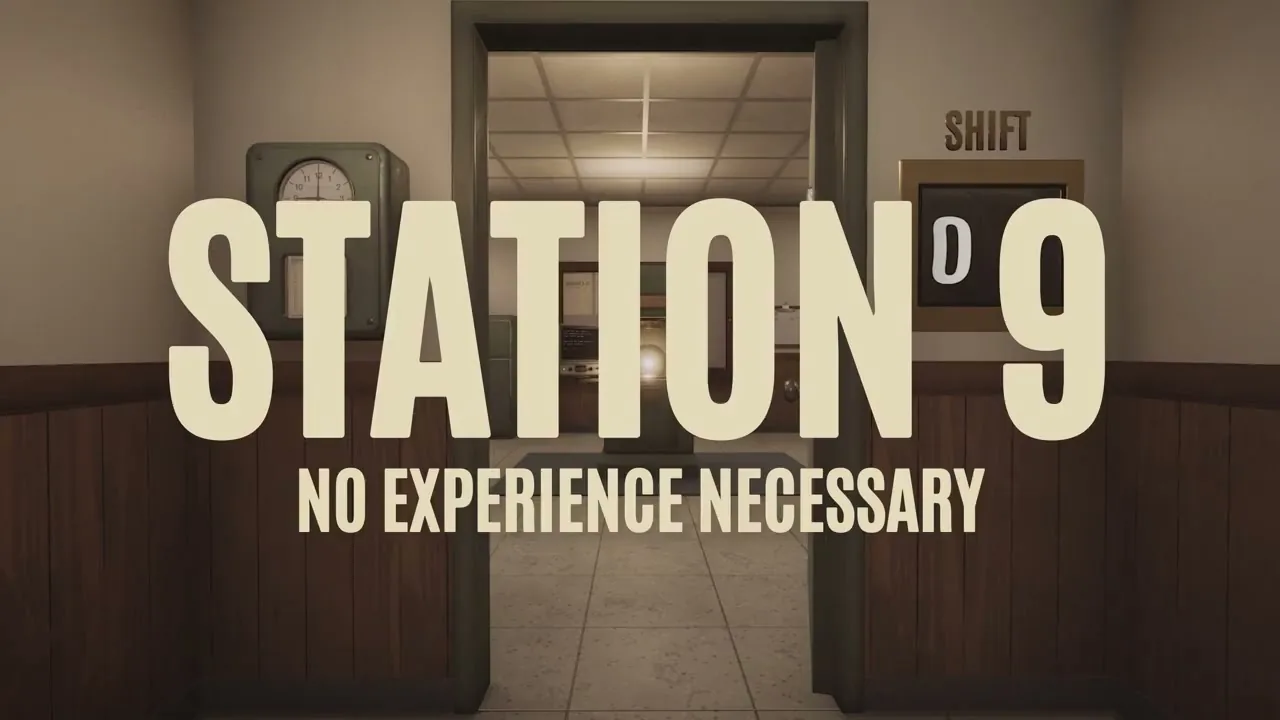
The Deadline Afterlife Processing trailer reveals MD Studio's bureaucratic afterlife simulator, where operators at Station 9 review deceased souls across three terminal fragments, apply shifting directives from the rulebook board, and earn wages to purchase machine upgrades from the catalog.
Station 9 Intake and Core Gameplay Loop
The announcement trailer establishes the Dispositions Section as a mechanical workplace where deceased souls arrive continuously at Station 9. Operators manage the intake line by examining glowing spherical souls through an amber-screened terminal. The interface relies entirely on physical workspace props, including paperwork, stamps, mechanical gears, and levers, rather than digital HUD elements or minimaps.
Each individual case presents three distinct soul fragments that describe the deceased person's earthly conduct. These text fragments take the form of direct confessions, legal alibis, or neighbor accounts. Operators review these records against workplace directives before setting a verdict. Engaging the confirmation lever brings down the mechanical seal, turning the soul record into processed documentation ready for physical transfer to the sorting chutes.
Rulebook Directives and Verdict Options
Judgments depend on an evolving bulletin board positioned inside Station 9. The facility mandates exact adherence to numbered directives, leaving ambiguous edge cases to operator discretion. Processed paperwork routes to two designated terminal points: Disposition A, marked in gold, and Disposition B, marked in red. Every disposition decision remains final with zero appeals allowed.
| Life Record Pattern | Prescribed Facility Action | Destination Exit |
|---|---|---|
| Record confirms documented acts of charity | Ascend | Disposition A (Gold) |
| Record confirms documented acts of theft | Descend | Disposition B (Red) |
| Unclassified confession or conflicting alibi | Operator verdict | Assigned exit A or B |
Facility directives expand and shift across shifts. Operators consult the rules board continually as new amendments take effect, ensuring each verdict aligns with management instructions.
Earnings and the Equipment Catalog
Processing souls generates physical wage slips at the station window. Higher intake speed directly increases operator income, which funds operational tools through the facility supply book.
Operators spend accumulated earnings in the catalog to purchase personal gear such as upgraded work boots, mechanical press modifications, and faster queue line intake systems. For repetitive manual tasks, the catalog offers automated automation units endorsed by management to handle select stages of the processing loop.
Platform Availability and System Requirements
MD Studio targets a Q1 2027 release window for Windows PC via Steam. Players can test the processing mechanics through the official Steam demo, featured during Steam Next Fest broadcast events.
Minimum hardware configurations require a 64-bit Windows 10 operating system, an Intel Core i5-4460 or AMD equivalent processor, 8 GB of RAM, and DirectX 12 compatibility paired with an NVIDIA GeForce GTX 960 or AMD Radeon R9 280 graphics card with 2 GB VRAM. Recommended specifications list an Intel Core i5-8400 or AMD Ryzen 5 2600 processor, 16 GB of RAM, solid-state drive storage, and an NVIDIA GeForce GTX 1070, RTX 2060, or AMD Radeon RX 5700 graphics card with 6 GB VRAM. Installation requires 4 GB of available storage space.